Removing institutional bottlenecks, proactively preventing risks
A good policy must solve practical problems. A valuable legal opinion must help competent authorities choose a feasible option. A digitized procedure must bring convenience to the people. These are the yardsticks that Ha Tinh’s justice sector aims for as it renews the work of law-making, law enforcement and service to people and businesses.
Ha Tinh is facing the need for rapid and sustainable development while operating the two-tier local government model and stepping up decentralization and delegation of power. Every regulation that lacks clarity about competence can slow down the processing of dossiers. Every prolonged obstacle can delay the use of land, capital and investment opportunities. Therefore, judicial work must take part from the moment policies are formed, proactively identify risks and follow implementation results through to the end.
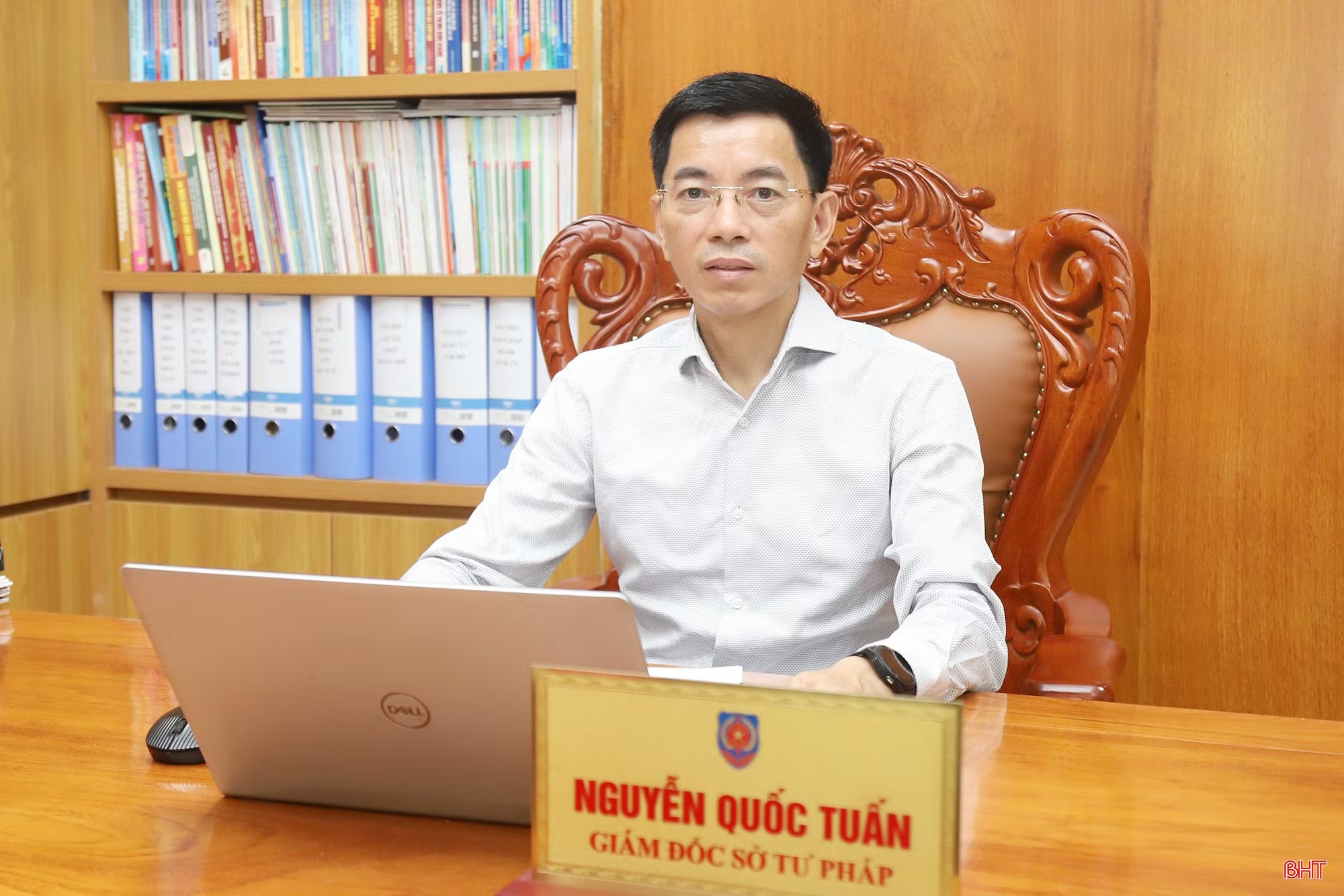
Mr. Nguyen Quoc Tuan, Director of the Ha Tinh Department of Justice.
Making policies from practice, verifying them through implementation results
Resolution No. 66-NQ/TW dated April 30, 2025 of the Politburo sets out the requirement to renew law-making and law enforcement, turning institutions into a competitive advantage. For Ha Tinh, this requirement needs to be concretized through regulations that clearly define competence, are feasible at the grassroots level and create favorable conditions for people and businesses.

Officials of the Legislative Affairs Division (Department of Justice) discuss matters related to the review of legal documents in the province.
Based on the advice of the Department of Justice, the Provincial People’s Committee has issued the Scheme on renewing and improving the effectiveness of law-making and law enforcement for the 2026–2030 period, with orientations to 2035, comprising 6 groups of tasks and 22 key solutions. The new feature of the Scheme is linking policy-making with monitoring of implementation. Obstacles at the grassroots level serve as inputs for the policy-making process. Implementation results serve as the basis for evaluating and amending inappropriate regulations.
The comprehensive review of legal documents issued from 1991 to date identified 388 provincial-level documents and 189 commune-level documents that were in effect, or had been issued but not yet taken effect, at the time of the review. As of September 30, 2026, the provincial level had handled or was handling 78 of the 146 documents proposed for handling. Eight of the 146 documents expired because the documents assigning detailed regulations had expired. The commune level had handled 18 of the 129 documents proposed. Through the review, the province also proposed issuing 14 new provincial-level documents.
As of October 2026, the Department of Justice had appraised 120 draft legal documents, up 42% over the same period last year, and provided comments on 408 draft documents.
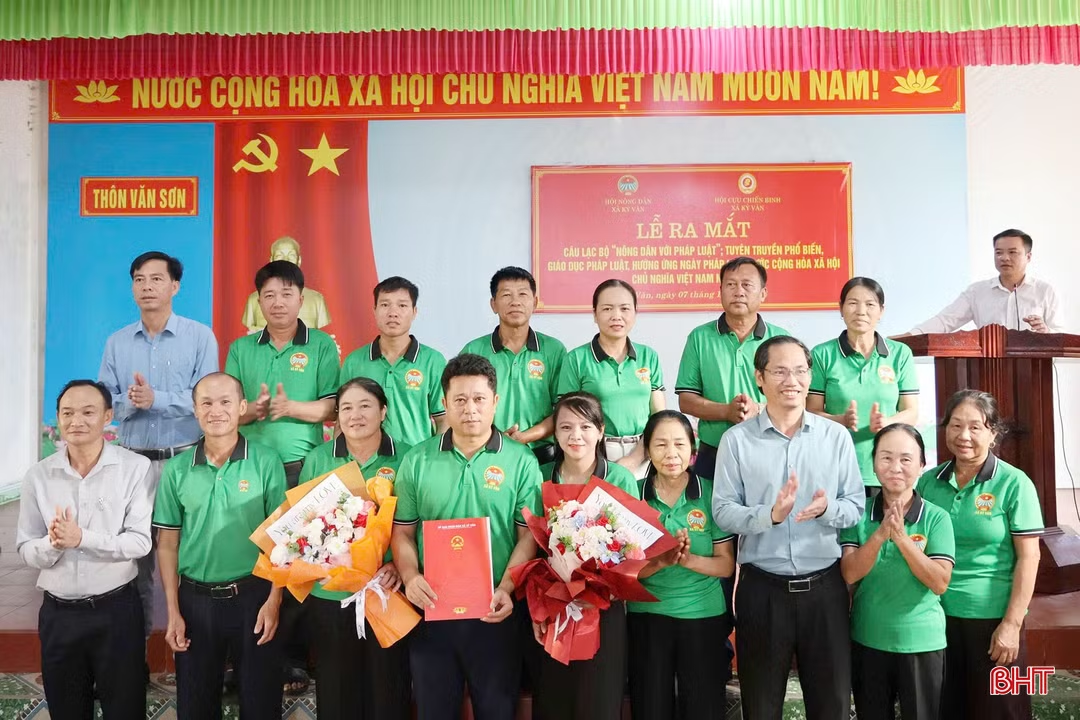

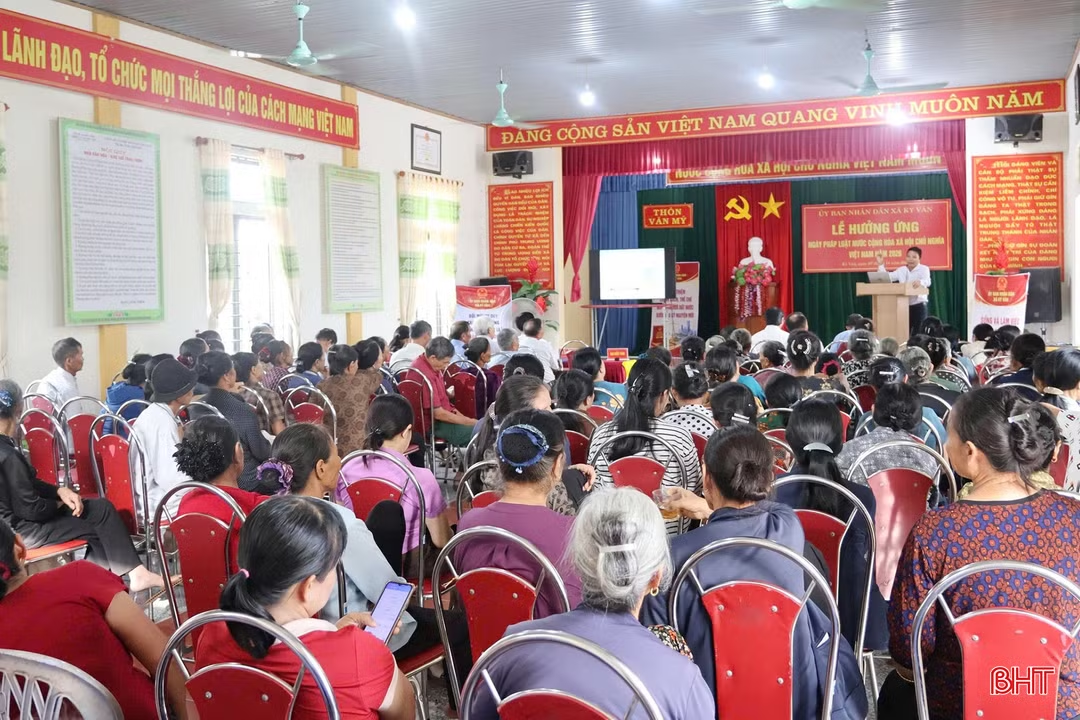
Ky Van commune actively organizes activities in response to Vietnam Law Day.
Along with reviewing and appraising legal documents, the Department of Justice has advised the Provincial People’s Committee to submit to the Standing Committee of the Provincial Party Committee for issuance a Directive on strengthening digital transformation in legal dissemination and education. In 2026, the Department signed coordination programs with 8 provincial agencies and units, while expanding cooperation with specialized organizations such as the Vietnam International Arbitration Centre (VIAC). For the same policy, the way of communicating it needs to suit each locality and group of people. A short video can help household businesses quickly grasp new regulations. In villages and hamlets with limited access to information, a face-to-face discussion allows people to ask directly about their own situations. Questions repeated in many places are also a signal for management agencies to review their guidance, implementation procedures or the regulations being applied.
Legal dissemination continues to focus on mountainous, border and coastal areas, and to emphasize education on respect for the law in schools. In each locality, it is necessary to select content close to daily life and promote the role of grassroots legal disseminators. Technology helps expand outreach, while face-to-face discussions help answer situations that need clarification.
Proactively preventing risks; using data for management and improving service quality


A synchronous, complete and consistent legal system, in line with innovative thinking, will be a key factor in building trust and a stable foundation for businesses to develop in the long term.
Implementing Resolution No. 68-NQ/TW of the Politburo on private economic development, the Department of Justice advised the Provincial People’s Committee to issue Plan No. 90/KH-UBND dated February 26, 2026 on inter-sectoral legal support for small and medium-sized enterprises and household businesses for the 2026–2030 period.
The Department has coordinated with tax authorities, the Vietnam Chamber of Commerce and Industry (VCCI), VIAC and experts to bring legal knowledge into specific situations involving taxes, contract negotiation, risk management and dispute resolution. The 2026 contest “Taxes for People and Businesses” attracted 156,072 entries, showing the wide reach of content tied to practical needs.


Online legal contests attract great interest from the people of Ha Tinh.
The preventive approach is also reflected in the Scheme on strengthening legal support for land recovery, compensation, support and resettlement for the 2026–2030 period.
Since the beginning of 2026, the Department of Justice has provided legal opinions on more than 196 matters and attended more than 492 meetings. The matters it advised on include prolonged cases, issues related to international investment disputes and major projects such as the Thach Khe iron mine and the water supply system of Vung Ang Economic Zone. For complex matters, legal opinions must clarify the legal basis, competence, conditions for implementation and risks of each option so that competent authorities can consider and decide.

The issuance of the Scheme on strengthening legal support for land recovery, compensation, support and resettlement in Ha Tinh for the 2026–2030 period ensures the legitimate rights and interests of the people and creates social consensus.
At the same time, the sector has focused on applying digital transformation. In the field of civil status, 100% of administrative procedures have been connected between the civil status registration and management system and the administrative procedure processing system, while 127,096 civil status records have been reviewed and standardized, mainly in communes after the reorganization. To date, the rate of birth registration dossiers processed through interconnected procedures has exceeded 99%. More than 19,500 cases have been registered online across the province. The Department of Justice also continues to use online channels to receive feedback and recommendations on legal documents and to make use of on-site feedback on i-HaTinh. This information helps detect recurring obstacles in implementation early and identify issues that need to be checked.
In addition, the Department of Justice has developed a set of indicators to monitor the sector’s tasks and a set of indicators to monitor the implementation of Resolution No. 66-NQ/TW, as a basis for integration into the province’s management dashboard.

Public administrative service centers in communes and wards are fully equipped with facilities and equipment to serve people and businesses.
In the coming time, Ha Tinh’s justice sector will focus on monitoring the implementation results of policies that directly affect people and businesses, proactively engage early in complex projects and cases, and at the same time strengthen judicial capacity at the commune level. When assigning additional tasks to the grassroots level, it is necessary to ensure that civil servants have adequate conditions to perform them, receive professional guidance and are given timely support on issues beyond their authority.
The hallmark of judicial work is reflected when a problematic regulation is resolved on time, when an investment decision rests on a solid legal basis, and when a citizen understands and is able to exercise their rights. Following these results through to the end is the responsibility of the justice sector in the development of the province.