Government’s action program on developing regions and organizing development space
On behalf of the Government, Permanent Deputy Prime Minister Pham Gia Tuc signed Resolution No. 358/NQ-CP dated November 9, 2026 promulgating the Government’s Action Program to implement Resolution No. 27-NQ/TW dated August 28, 2026 of the Politburo on developing regions and organizing the national development space in the new period.
The Program aims to concretize the objectives, tasks and solutions set out in Resolution No. 27-NQ/TW in order to further promote the potential and advantages of each region, boost regional linkages and effectively tap the new development space of localities and regions following the reorganization of administrative units and the implementation of the two-tier local government model, while clearly specifying the contents, lead agencies, coordinating agencies, outputs/evaluation and completion deadlines.
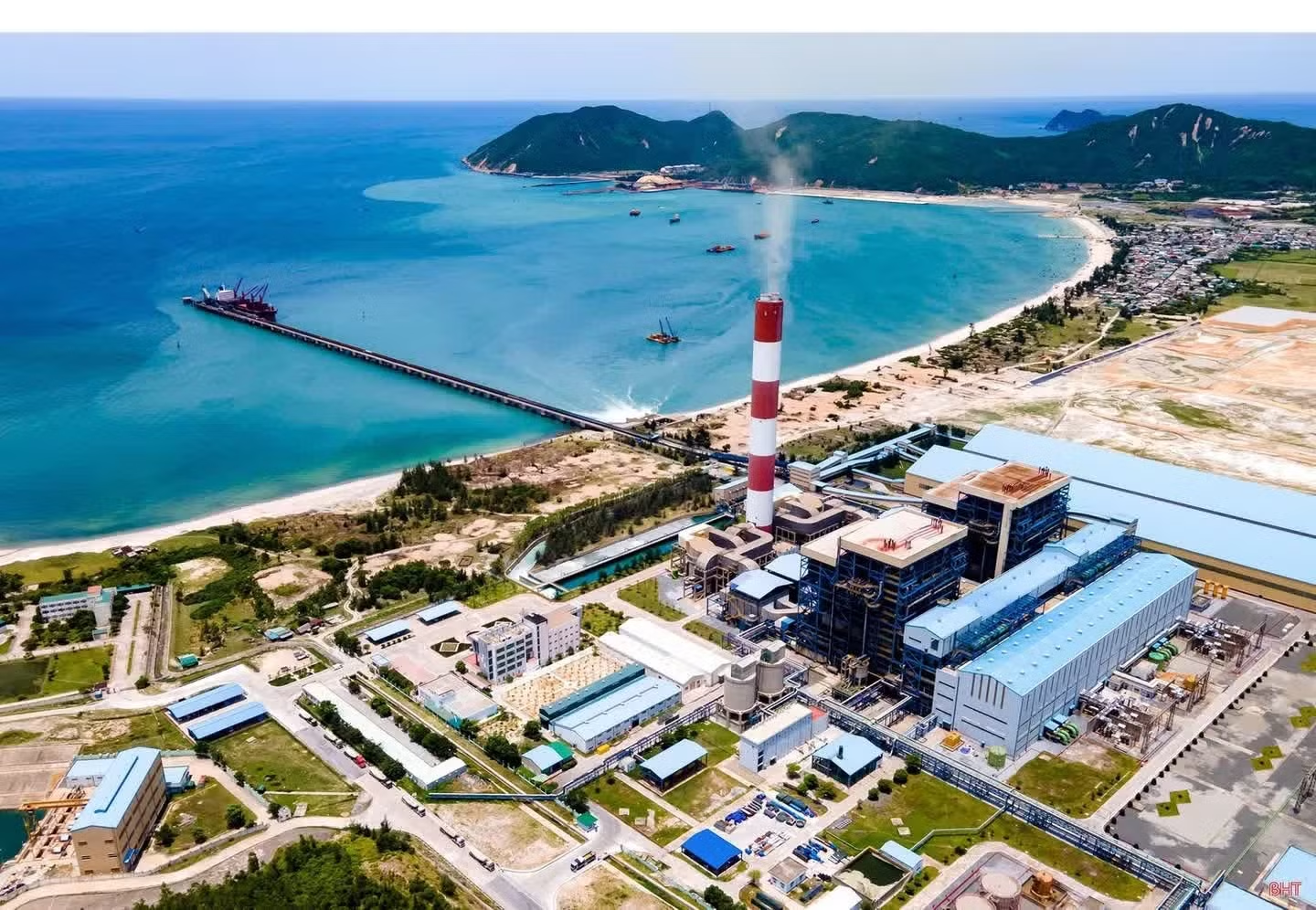
Resolution 27 orients the development of the coastal areas of Thanh Hoa, Nghe An and Ha Tinh provinces into an industrial center of the region and the whole country. In the photo: Vung Ang Economic Zone (Ha Tinh).
The Program upholds the facilitating and coordinating role of the Government based on the principles of clear assignment, decentralization and delegation of power, democratic centralism and close coordination tied to the responsibilities of each ministry, central agency and locality; ensures feasibility, consistency and interconnectivity in planning, investment, infrastructure development, data and resource allocation; and harmonizes the interests of localities, regions and the nation. It also steps up decentralization and delegation of power to ministries, central agencies and localities, coupled with monitoring, inspection and supervision, in order to strongly promote the proactiveness, creativity, self-reliance and self-strengthening of regions and localities.
11 key tasks and solutions
To successfully implement the viewpoints, objectives and specific targets set out in Resolution No. 27-NQ/TW, the Government requests ministers, heads of ministerial-level agencies and chairpersons of People’s Committees of provinces and centrally-run cities to focus on directing the implementation of 11 key tasks and solutions:
1. Renewing thinking and raising awareness of developing regions and organizing the national development space in the new period.
2. Organizing regional development space and effectively implementing regional planning.
3. Synchronously improving institutions for regional development.
4. Renewing the growth model, and forming and developing new economic drivers for regions.
5. Developing modern, synchronous and inter-regional socio-economic infrastructure.
6. Developing a modern urban system and regional growth poles.
7. Developing high-quality human resources, science, technology, innovation and digital transformation.
8. Developing culture and society and ensuring comprehensive social security.
9. Protecting the environment and adapting to climate change.
10. Strengthening national defense and security; promoting external relations and international integration.
11. Building and rectifying the Party and the political system.
Connecting domestic economic corridors with regional and international economic corridors
Accordingly, the Program will effectively implement regional plans in line with the orientations of the National Master Plan and national sectoral plans in each region; and organize the socio-economic development space of each region in a multi-layered, multi-polar manner, with synchronous linkages between land, sea, airspace, underground space, digital space and new development spaces, suited to each region’s functions, potential, advantages, resource and environmental conditions following the reorganization of administrative units and the two-tier local government model.
The Program will form and develop economic corridors, including: the North–South economic corridor based on the eastern North–South transport axis; the Lao Cai – Hanoi – Hai Phong – Quang Ninh economic corridor; and the Moc Bai (Tay Ninh) – Ho Chi Minh City – Bien Hoa – Vung Tau economic corridor; and gradually form and develop other economic corridors in the long term, effectively connecting national key economic regions and growth poles, with attention paid to connecting domestic economic corridors with regional and international economic corridors.
Focus will be placed on developing the national key economic regions identified in the National Master Plan; promoting the role of growth poles, urban areas and key localities as locomotives leading growth, strengthening linkages and spreading development within and between regions; and continuing to expand the scope of key economic regions when conditions are met.
Priority will be given to allocating resources to effectively implement the objectives, key tasks, breakthroughs and contents of regional plans, with attention to investment in growth poles so that they serve as driving forces for the socio-economic development of the whole region.
Strongly developing new growth drivers for each region
The Program will strongly renew the growth model of each region based on productivity, science, technology, innovation, digital transformation, green transformation, energy transition, structural transformation and high-quality human resources; and strongly develop new growth drivers for each region from high-tech industry, high-value services, smart agriculture, the digital economy, the data economy, the green economy, the circular economy, new economic models and high value-added sectors.
The marine economy will be developed in a modern direction, forming growth poles, economic centers, economic corridors and key economic regions with high competitiveness, closely linked to the national urban network; priority will be given to developing coastal economic zones that focus on a number of key industries suited to each locality, creating growth breakthroughs.
The Program will develop synchronous, modern, transparent and interconnected factor markets, especially the capital market, the science and technology market and the high-quality labor market; and turn infrastructure development into a strategic economic sector, linking railway, seaport, energy, smart city and digital infrastructure works with the development of supporting industries, gradually mastering production technologies and increasing the localization rate.
It will encourage the development of high value-added industries and sectors capable of self-reliant domestic production and deep participation in global value chains; support the development of processing and manufacturing industries, supporting industries, high-tech industries and digital technology industries; create favorable conditions for the development of financial services, logistics, e-commerce and high-quality tourism; and restructure agriculture towards an ecological, circular, high-tech, high value-added and low-emission model along value chains.
Prioritizing investment in the North–South backbone transport infrastructure and new-generation East–West corridors
Resources will be concentrated on developing and completing synchronous strategic infrastructure with multimodal connectivity, especially transport infrastructure, seaports, airports, energy, climate-resilient infrastructure capable of withstanding high-level natural disasters, digital infrastructure, data and green infrastructure; with all types of infrastructure effectively connected along economic corridors and regional development spaces.
Priority will be given to investing in the North–South backbone transport infrastructure and new-generation East–West corridors; gateway seaports with international transshipment functions, major international airports, railways connecting with major seaports, international railway connections, urban railways and the high-speed railway on the North–South axis; upgrading and modernizing existing railways and effectively tapping the advantages of waterway transport so that it becomes the main mode of transport in some regions, optimizing logistics chains; and developing energy infrastructure to firmly ensure national energy security and meet the requirements of double-digit economic growth.
Irrigation and natural disaster prevention systems will be developed in a multi-purpose direction; key irrigation works and reservoirs will be upgraded to ensure water security for production and people’s lives; water control works will be built at major river mouths to proactively control salinity and store fresh water; flood and inundation prevention systems will be reinforced, and flood drainage spaces in river basins and riverbeds will be better protected to ensure flood discharge capacity and protect urban areas, especially large cities.
Resources will be concentrated on completing expressways, coastal roads and important national highways to meet the development requirements of economic corridors and the need for regional and inter-regional connectivity, ensure seamless connectivity within the new administrative units after mergers, and connect gateway infrastructure (seaports and international airports), thereby opening up new development space and creating new momentum for economic growth.