Investing in upgrading border gates, expanding connectivity space
Ha Tinh’s system of land border gates is oriented for investment to improve customs clearance capacity, expand space for economic development, protect the border and strengthen external relations.
Trade gateways facing new development requirements
Along the nearly 164.5 km border with Laos, Cau Treo International Border Gate plays a core role in trade connectivity with the provinces of Central Laos and Northeast Thailand. In addition, Ha Tinh has two secondary border gates, Kim Quang (Vu Quang commune) and Da Gan (Son Hong commune), connecting with Khamkeut district of Bolikhamxay province, and the Dong Trim border crossing (Huong Xuan commune) connecting with Nakai district of Khammouane province.
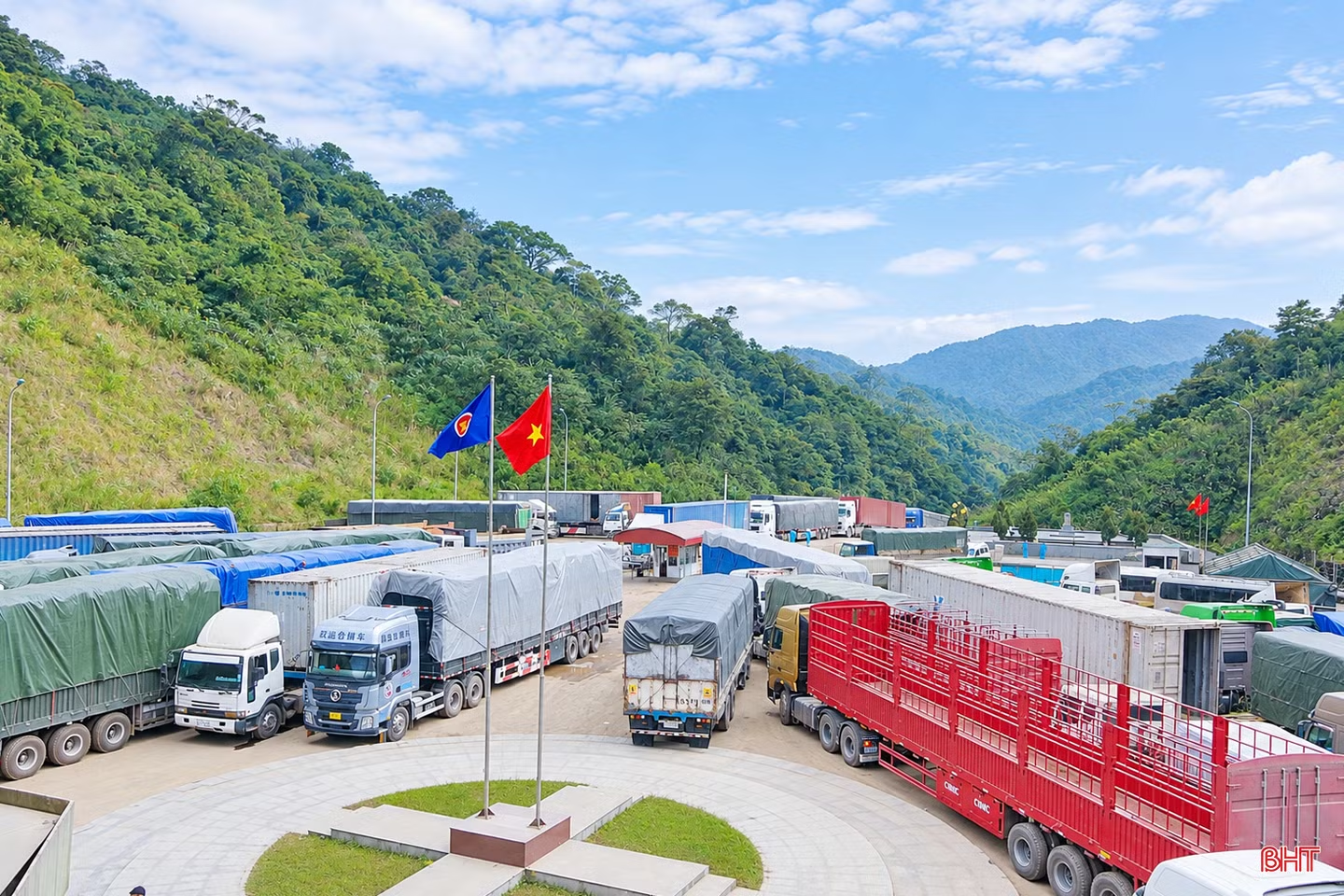
Cau Treo International Border Gate plays a very important role in the movement of goods, regional connectivity, border protection, crime prevention and the strengthening of external relations.
Since 2021, Ha Tinh’s land border gate system has completed clearance procedures for more than 2.8 million passenger crossings and 781,650 vehicle crossings; the volume of imported and exported goods reached nearly 1.6 million tonnes, with a turnover of nearly USD 2.3 billion and budget revenue of about VND 2,010 billion. These results demonstrate the important role of border gateways in connecting and promoting regional trade.
Not only promoting the economy, the border gate system also plays an important role in ensuring national defense and security, protecting sovereignty, conducting external relations and combating transnational crime. Colonel Bui Hong Thanh, Commander of the Border Guard Command (Provincial Military Command), said: “Since early 2021, we have coordinated with competent forces to detect and handle nearly 2,000 administrative violations and to combat and prevent 55 cases involving 66 offenders committing drug-related crimes, illegal entry and exit, smuggling, etc. This has contributed to maintaining security and order at the border gates and along the entire border.”
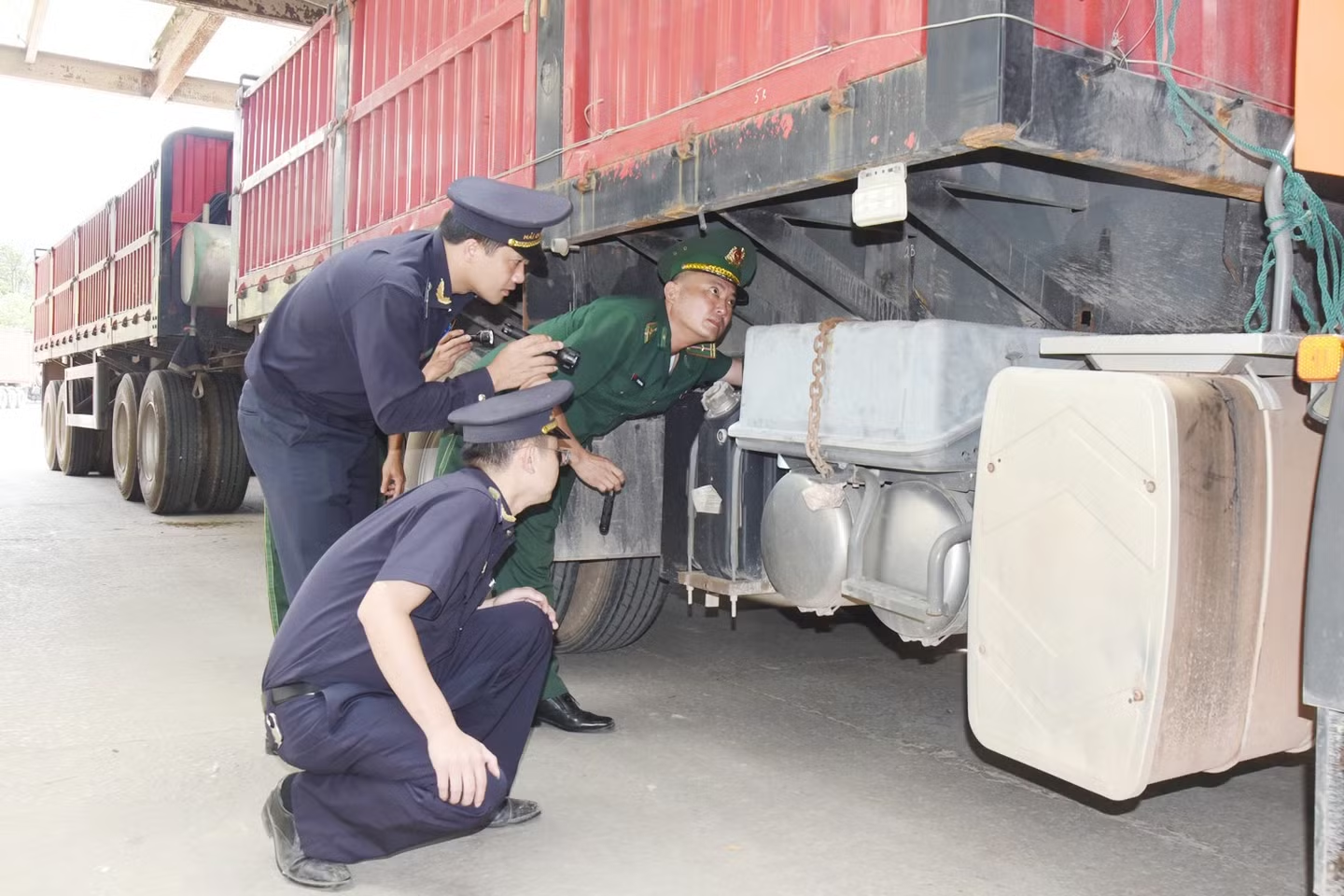
Competent forces at Cau Treo International Border Gate inspect and control vehicles and goods for clearance.
Despite their important role in many fields, the infrastructure at the border gates and border crossings has yet to meet development requirements. At Cau Treo International Border Gate, some facilities have deteriorated, space is limited, and there is a lack of vehicle parking areas, goods inspection yards and cargo transshipment areas. Equipment serving import, export, entry and exit is still insufficient and not synchronous, and efforts to attract businesses to move goods through the border gate have not achieved the expected results.
The secondary border gates and border crossings also lack infrastructure, with narrow roads and limited control equipment and human resources. Activities here are mainly the entry and exit of border residents, with no import or export of goods. Kim Quang secondary border gate in particular has been almost paralyzed since the Ngan Truoi – Cam Trang project came into operation (in 2018), as there is no longer a road leading to the border gate. This situation calls for urgent synchronous investment in infrastructure and the reorganization of development space in the border area.
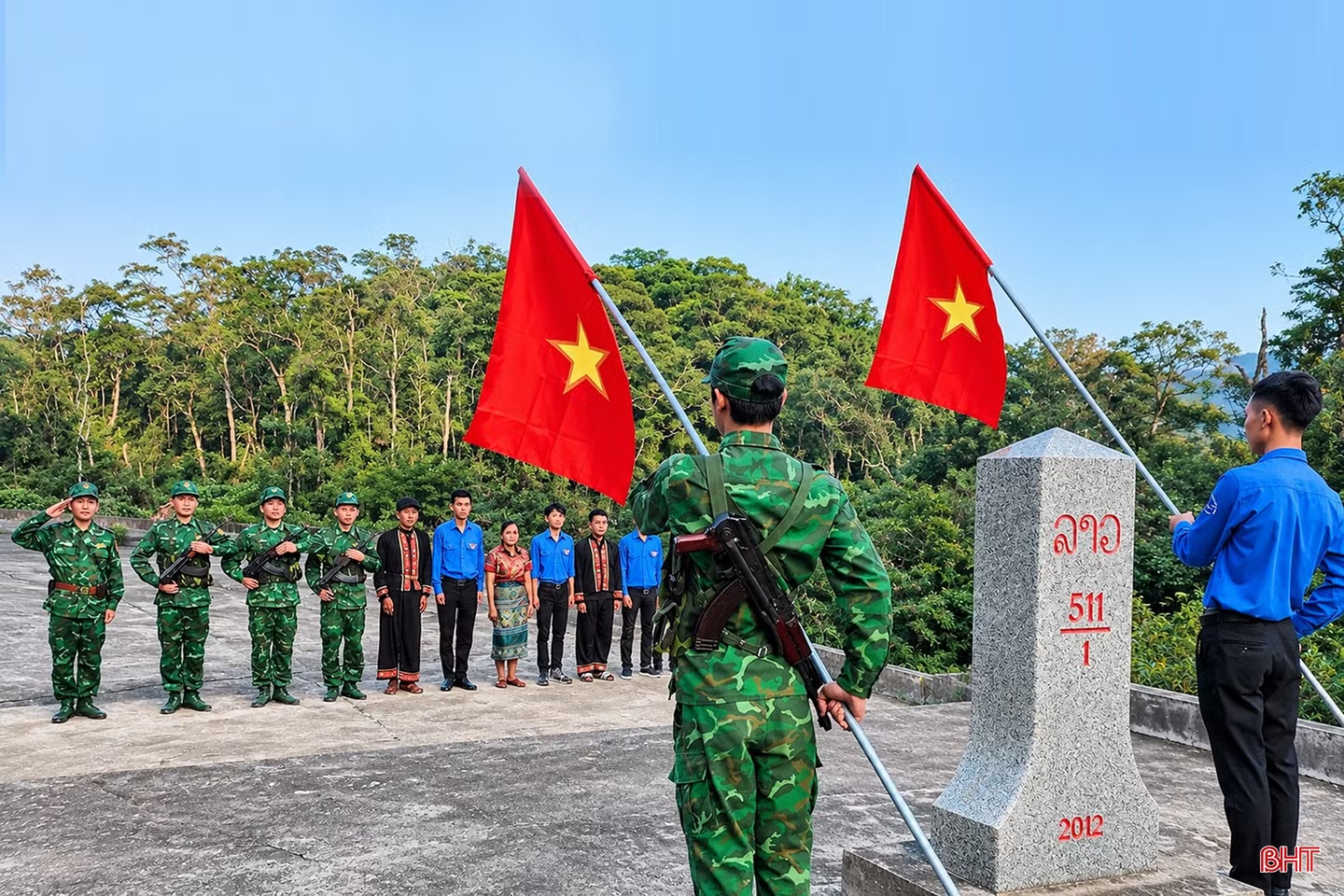
Border guards, youth union members and residents of Ban Giang 2 hold a flag-raising ceremony at border marker 511/1 (located on the Dong Trim border crossing).
Expanding connectivity space, creating growth momentum
In order to turn Cau Treo International Border Gate into a center for trade, services and goods transshipment on the East–West economic corridor, on March 16, 2026, the Prime Minister issued Decision No. 439/QD-TTg approving the adjusted General Construction Plan of Cau Treo International Border Gate Economic Zone to 2045. The economic zone is oriented towards multi-sectoral development, focusing on trade, services, logistics, tourism, industry, etc., with a core area of 9 subzones covering 23,411 hectares.
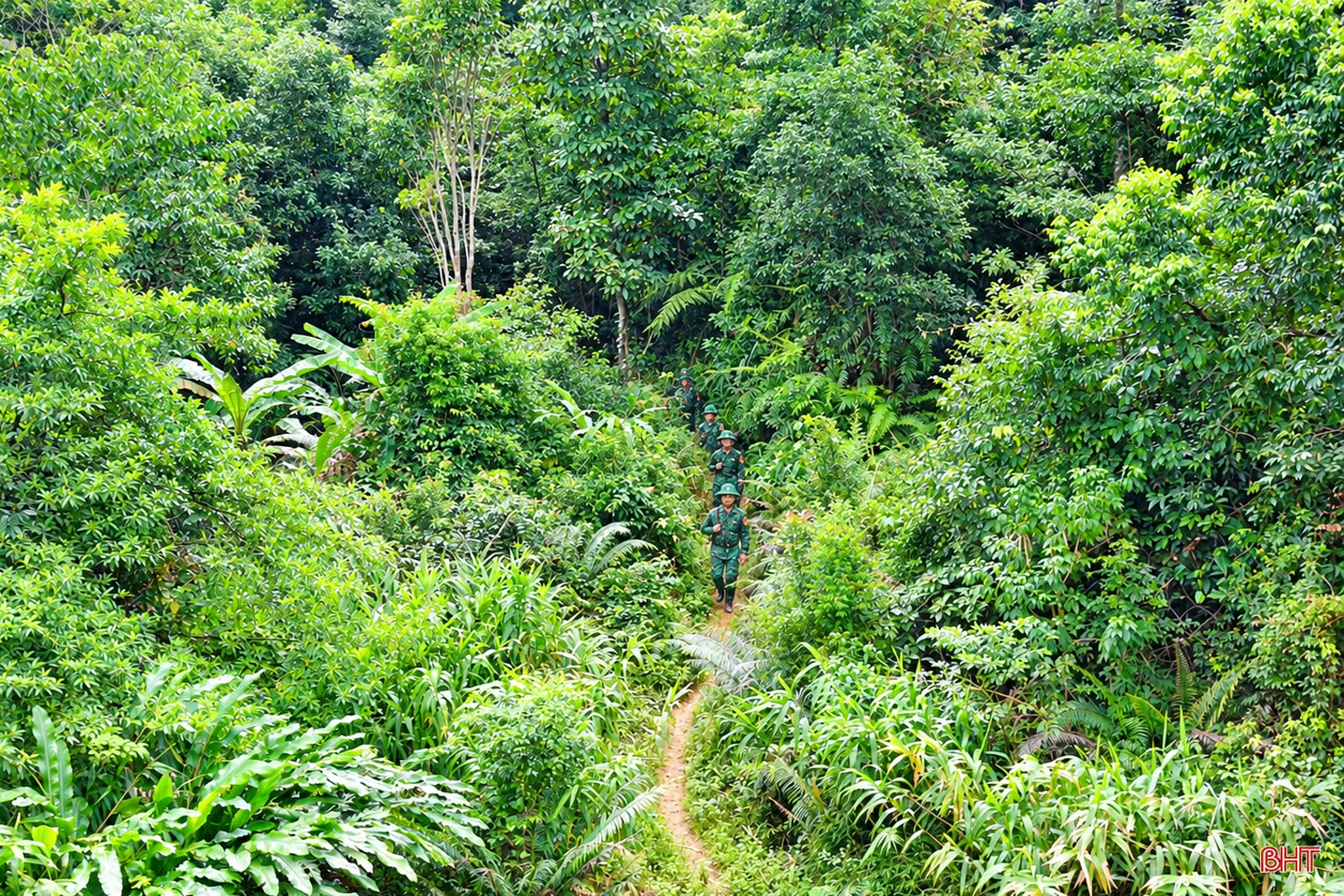
Officers and soldiers of Ban Giang Border Guard Station patrol the border area around the Dong Trim border crossing.
In addition to VND 110 billion invested in Cau Treo International Border Gate in the 2021–2026 period, Ha Tinh is gradually concretizing the development plans and orientations of the central government. Accordingly, in July 2026, the Provincial People’s Committee issued a decision approving the investment policy for the Project on upgrading and renovating the Joint Control Building and technical infrastructure in the border gate area for the 2026–2028 period, with a total investment of more than VND 154 billion. The project will focus on expanding the national gate building, increasing the number of lanes for vehicles entering and exiting, renovating functional facilities and many other important items.
Mr. Tran Dinh Nghi, Deputy Head of the Provincial Economic Zone Management Board, said: “The upgrading of the border gate is closely linked with the planning of Cau Treo International Border Gate Economic Zone to 2045, aiming to build a multi-sectoral general economic zone in which trade, services and logistics are the key sectors. We will attract capable investors to develop warehouses, distribution centers, transport services and import-export logistics, while strengthening state management to strictly ensure investment, land, construction and business activities.”
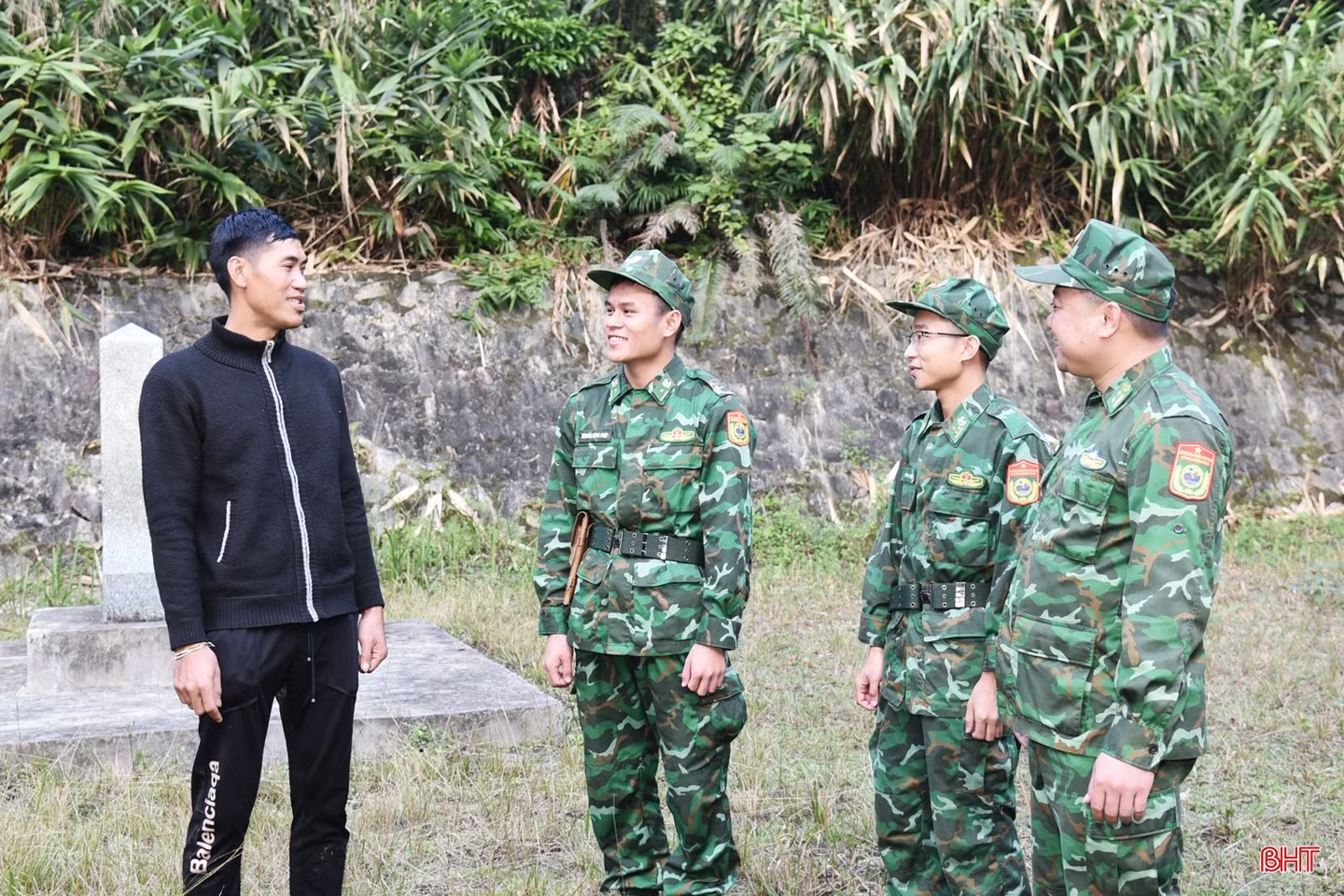
Officers and soldiers of Son Hong Border Guard Station remind local people not to cross the border arbitrarily or carry prohibited goods through Da Gan secondary border gate.
Ha Tinh also aims to upgrade Da Gan secondary border gate to a main border gate by 2030 and to upgrade the Dong Trim border crossing to a secondary border gate by 2032. This orientation is set out in Plan No. 443/KH-UBND dated June 30, 2026 on implementing the Land Border Gate Plan for the 2021–2030 period, with a vision to 2050.
To realize these goals, the 36 km Tay – Linh – Hong road connecting National Highway 8 with Son Hong commune has been invested in by the province and put into use. The nearly 18 km road from the commune center to Da Gan border gate, with a total investment of VND 150 billion, is under construction and is expected to be completed in 2026. At the same time, Provincial Road 553 through Ban Giang 2 has been upgraded and is oriented to be further extended to Dong Trim.
Mr. Nguyen Minh Tuan, Chairman of the Son Hong Commune People’s Committee, said: “To prepare for the goal of upgrading Da Gan border gate, the locality is proactively grasping the situation and is ready to coordinate with relevant departments and agencies to gradually carry out planning and implement tasks within its competence. Upgrading the border gate will open up more opportunities for connectivity, promote economic development, strengthen external relations and improve the lives of people in the border area, so the local Party committee, authorities and people are very excited.”
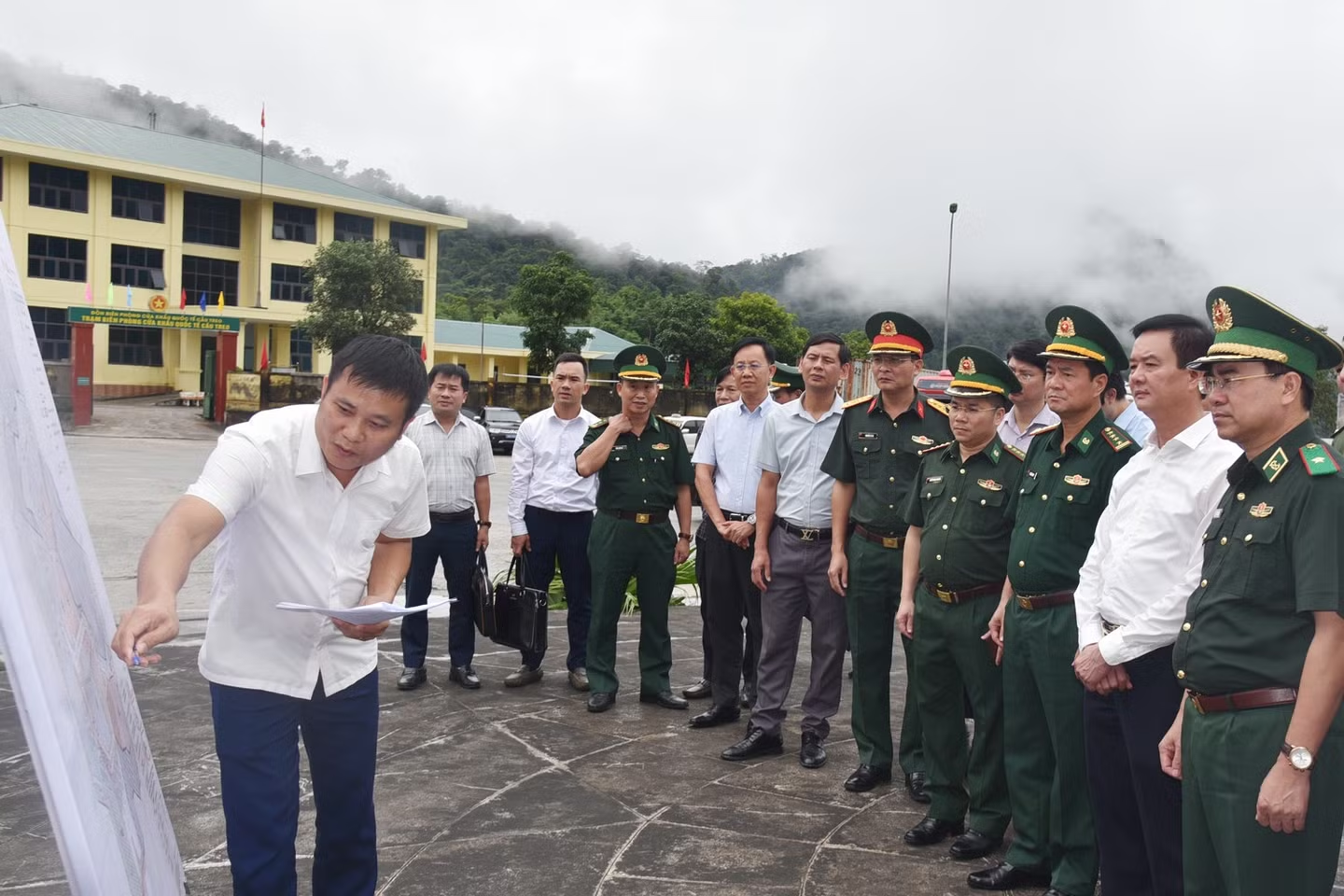
Permanent Vice Chairman of the Provincial People’s Committee Tran Bau Ha and a working delegation of the Vietnam Border Guard High Command inspect management, planning and investment at Cau Treo International Border Gate.
Along with domestic investment, Ha Tinh is strengthening coordination with Lao border provinces to improve connecting infrastructure. Accordingly, the province has advised the Governments of the two countries to implement the project to expand the Nam Phao – Cau Treo road, funded by Vietnamese Government aid and implemented by the Lao side. At the same time, it is promoting the renovation and upgrading of roads connecting the Nam Xac – Son Hong border gate and the Macca – Dong Trim border crossing to serve the common goal.
Permanent Vice Chairman of the Provincial People’s Committee Tran Bau Ha affirmed that developing the land border gate system is not only a matter of infrastructure or improving clearance capacity, but also a strategic issue in expanding development space and enhancing Ha Tinh’s position in regional linkages. Ha Tinh has also identified the need to effectively tap its geo-economic advantages and turn the border gates into connecting points for flows of goods, services and investment between Vietnam, Laos and the provinces of Northeast Thailand. This process will be carried out with a long-term vision, ensuring harmony between economic efficiency, state management, national defense and security, and friendly and cooperative relations with Laos.